
Continuing on a Theme - Life Starts in the Feet
Fascia, fluid, and what happens when you bring circulation back to the foundation

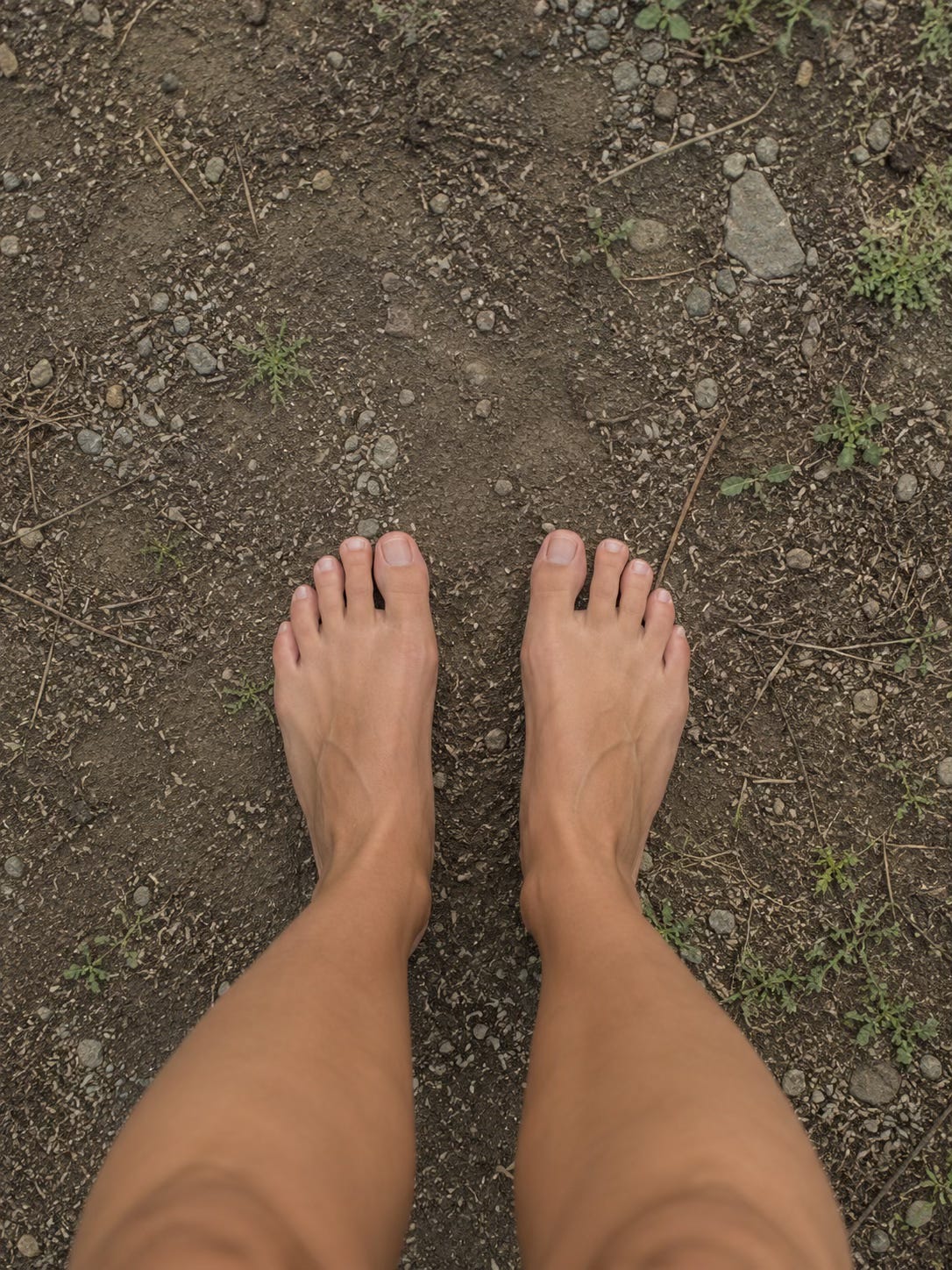
The series started with a conversation with Helen Brunner, a neuromuscular therapist and Block Therapy practitioner who has been working on my body for years. Her observation — death starts in the feet — sent me down a research path that became two posts about the sensory intelligence of the feet, the fascial highway running from the plantar surface to the base of the skull, and the implications for balance, swallowing, and Parkinson’s.
But Helen has been trying to get me to use the block for years. I resisted longer than I should have. When I finally started, I understood why she kept pushing.
Recently I came across a video from Deanna Hansen, who founded Block Therapy, that lays out the other half of the story Helen has always been pointing at. Not death starting in the feet — life starting there. Recovery starting there.
The title was: Fix Your Feet, Fix Your Body.
The premise of Block Therapy is fascia decompression. Fascia is the continuous connective tissue that surrounds and interpenetrates every muscle, organ, bone, and nerve in the body. When it’s healthy, it’s hydrated and organized. When it’s compressed — from injury, habitual posture, immobility — it thickens, dehydrates, and adheres to neighboring structures, restricting movement and blood flow.
The feet are the farthest point from the diaphragm, the body’s primary fluid pump. Distance matters. Circulation to the extremities is most easily compromised, and compression in the fascial tissue of the feet can be among the most stubborn and overlooked in the body. Cold feet. Morning stiffness. Balance that isn’t what it was. These aren’t inevitable features of aging. They’re often signatures of fascial compression that can be addressed.
Restoring circulation to the feet sends changes upward through the whole kinetic chain. The fascial network doesn’t stop at the ankle. When you change one part of it, the conversation travels — through the ankle, knee, hip, low back, and all the way up the posterior line I wrote about in the last piece.
One of the simplest observations in the video is also one of the most revealing.
Most of us have one foot that splays outward — a structural collapse, like a flat tire — and another that compensates by gripping to prevent the body from tipping. That asymmetry isn’t random. It’s the result of years of accumulated compensation, usually starting with some initial difference in injury, footwear, or gait. The body is solving a problem, but the solution costs something: the gripping foot develops chronic tension, the splay foot loses stable ground contact, and the fascial chain twists in ways that show up as tightness in the hip, sacrum, or the shoulder on the opposite side.
I noticed something like this when I walked up the gravel road in my Peluvas. The right foot — the one injured in my twenties — felt structurally less stable. My nervous system had incorporated the compensation so thoroughly I’d stopped noticing it. The uneven surface gave it back to me.
The practical work starts between the toes.
Healthy toes splay, grip the ground, and distribute weight across the full width of the forefoot. In most modern feet, decades in narrow shoes have compressed them together, weakened the intrinsic muscles, and muted the sensory receptors. Working between the toes with fingers, a cord, or a pencil begins to separate the compressed tissue and restore independent mobility. The toes are where the fascial web of the foot terminates. Restoring spread there changes the loading pattern across the entire plantar surface.
The ankle exercise is straightforward: place the heel of one foot in front of the other foot’s ankle joint and apply gentle, sustained pressure for three to five minutes, breathing slowly. The goal is not to force the joint but to allow sustained pressure to soften the fascial tissue around the ankle. Dorsiflexion — lifting the front of the foot to take a proper step — depends on that ankle mobility. When it’s restricted, the body compensates with a shortened stride, reduced arm swing, a gait that begins to look like a shuffle.
That word keeps coming back.
The body is not a collection of separate structures managed by separate specialties. It is a continuous medium. The fascial network carries mechanical signals. The glycocalyx carries electrochemical ones. The nervous system integrates both.
When the feet are cold, compressed, and stagnant, the mechanoreceptors in the sole are less active, the posterior fascial chain is under altered tension, and the vestibular system loses a significant input stream. The result, over years, is exactly what Helen was describing: a cascade that starts at the foundation and climbs.
What Block Therapy proposes is that this is reversible. Not by heroic intervention but by consistent attention to the tissue itself. Daily practice. Sustained pressure. Breathing. The diaphragm as fluid pump, fascia as distributed medium, the feet as both the site of the problem and the place to begin addressing it.
Helen said death starts in the feet. She has also spent years trying to get people — including me — to start there with the work of bringing life back. Those two things are the same insight from opposite directions.
Block Therapy’s video “Fix Your Feet, Fix Your Body” is on YouTube. Deanna Hansen’s full practice and community are at blocktherapy.com. Or you can find it here on YouTube
Keep walking!
With gratitude,
Martha
www.biotiquest.com
www.marthasquest.com
Thanks for sharing this info. I just did a deep dive on Deanna's Block Therapy You Tube.
It seems like this might help with different body issues that have accumulated over a long life and trauma. It makes sense. Seeing the before and after pictures made an impression
Two perfect feet!