
Quaternary Ammonium Compounds

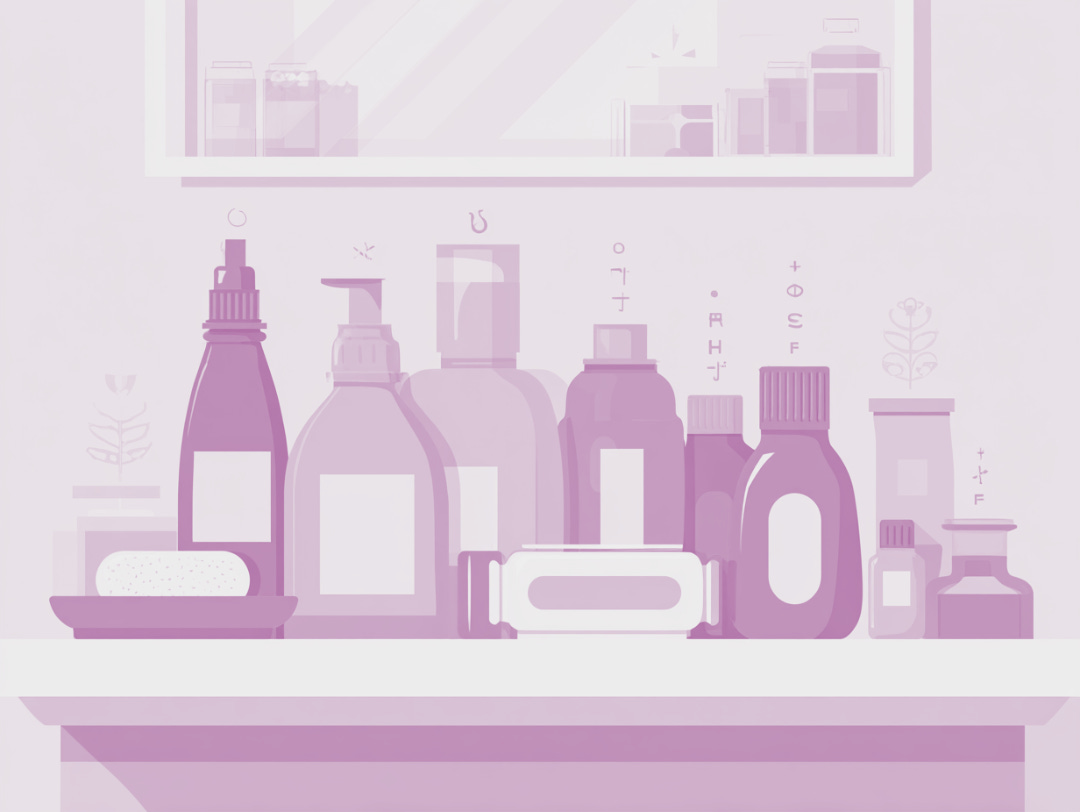
Trace-level contaminants permeate nearly every environment we occupy. QACs, or quaternary ammonium compounds, are a common case. Found in household cleaners, skincare products, shampoos, lotions, laundry products, textiles, and even some toothpastes and baby products, they have become routine chemical companions in daily life. Use surged during COVID-19 and continues to rise, while research on long-term risks lags.
QACs form a large chemical family. They share a positively charged ammonium core but differ in side chains that affect behavior and toxicity. Labels and regulations often group them with overlapping acronyms (BAC, ADBAC, DADMAC, ATMAC). Some of the most common ingredient names include:
Benzalkonium chloride
Cetrimonium chloride
Stearalkonium chloride
Behentrimonium chloride
Polyquaternium compounds
Their applications span cleaning products, hand sanitizers, shampoos, conditioners, baby wipes, lotions, deodorants, laundry softeners, textiles, antimicrobial coatings, polymers, and plastics. Importantly, many soaps and personal care items marketed as plant-based or “natural” still contain these compounds, blurring the line between “green” branding and chemical exposure. Several QACs exceed a million pounds annually in U.S. production or import. Demand has risen steadily as hygiene habits and regulatory shifts push manufacturers toward QAC-based formulations.
Persistence and Exposure
Once released, QACs dissolve in water, hold a permanent positive charge, and resist evaporation. These traits allow them to remain in household dust, bind to soils and biosolids under low-oxygen conditions, and resist breakdown, especially longer-chain QACs in personal care and textiles. Studies confirm that they can linger indoors for weeks and accumulate in wastewater, surface waters, and soils where concentrations rise over time (Heyde et al.).
This persistence translates into exposure. Biomonitoring detects them in 80–97% of people (Arnold et al.). Dust and indoor air act as steady reservoirs, and children ingest more relative to body weight than adults. Inhalation and skin contact provide further routes of entry. Blood and breast milk confirm systemic circulation and infant transfer. During COVID-19, U.S. serum QAC levels rose 77% (Zheng et al., 2021). Dust and air concentrations also spiked with disinfecting practices (Zheng et al., 2020).
Risks to Health and Environment
QACs are toxic to aquatic life, with some field concentrations exceeding regulatory thresholds in water and soil near wastewater effluent. Bioaccumulation and long-term soil impacts remain understudied, yet the early evidence points toward lasting ecological disruption.
For human health, the risks cluster in five areas: skin and allergy, respiratory and immune, reproductive and developmental, biochemical and systemic, and antimicrobial resistance. They have been linked to dermatitis, asthma, reproductive disruption, metabolic interference, and antibiotic cross-resistance. Research also points to mitochondrial disruption and altered lipid metabolism—mechanisms implicated in Parkinson’s disease. Studies of mitochondrial dysfunction in dopaminergic neurons (Exner et al., 2012) and altered lipid homeostasis (Fanning et al., 2020) describe biological pathways that overlap with those affected by QAC exposure, suggesting a possible area for further study.
Regulation and Needed Action
Despite the ubiquity of QACs, U.S. oversight is fragmented. Structural differences within QAC subclasses are often ignored despite clear links to toxicity. National biomonitoring programs like NHANES do not track them. Ingredient labeling is inconsistent, and agency data-sharing limited. Some U.S. states and European regulators are restricting certain QACs, but class-level action remains absent.
Closing these gaps will require expanded surveillance of QACs in air, water, soils, dust, blood, urine, and breast milk, ideally through national surveys. Research must link chronic, low-level exposures to outcomes and compare toxicity across subclasses. Regulation should harmonize definitions, improve ingredient disclosure, align oversight across agencies, apply “essential use” frameworks, and restrict non-essential uses.
A Broader Lens on “Clean”
QACs persist in homes, ecosystems, and bodies. They accumulate in blood and breast milk, and their risks range from skin irritation to reproductive disruption and antibiotic resistance. They provide disinfection benefits, though evidence suggests their effectiveness is limited compared with soap, water, and targeted hygiene. These patterns delineate how exposures accumulate and interact, producing measurable biological strain before symptoms appear.
The review also underscores that absence of evidence is not evidence of safety. Awareness, restraint, and regulatory alignment are overdue. Recognizing how QACs are embedded in daily routines should prompt us to consider whether the way we pursue “clean” is sustainable—and whether it’s time to reconsider what cleanliness means.
With gratitude,
Martha
References
Exner, Nico, et al. “Mitochondrial Dysfunction in Parkinson’s Disease: Molecular Mechanisms and Pathophysiological Consequences.” EMBO Journal, vol. 31, no. 14, 2012, pp. 3038–3062. Nature Publishing Group, https://doi.org/10.1038/emboj.2012.170
Fanning, Saranna, Dennis Selkoe, and Ulf Dettmer. “Parkinson’s Disease: Proteinopathy or Lipidopathy?” NPJ Parkinson’s Disease, vol. 6, 2020, article 3. https://doi.org/10.1038/s41531-019-0103-7
Arnold, William A., et al. “Quaternary Ammonium Compounds: A Chemical Class of Emerging Concern.” Environmental Science & Technology, vol. 57, no. 20, 2023, pp. 7645–7665. American Chemical Society, https://doi.org/10.1021/acs.est.2c08244
Heyde, Benjamin Justus, et al. “Quaternary Alkylammonium Disinfectant Concentrations in Soils Rise Exponentially after Long-Term Wastewater Irrigation.” Environmental Research Letters, vol. 16, no. 6, 2021, 064002. https://doi.org/10.1088/1748-9326/abf0cf
Zheng, Guomao, Thomas F. Webster, and Amina Salamova. “Quaternary Ammonium Compounds: Bioaccumulation Potentials in Humans and Levels in Blood before and during the Covid-19 Pandemic.” Environmental Science & Technology, vol. 55, no. 21, 2021, pp. 14689–14698. https://doi.org/10.1021/acs.est.1c01654
Zheng, Guomao, Gabriel M. Filippelli, and Amina Salamova. “Increased Indoor Exposure to Commonly Used Disinfectants during the COVID-19 Pandemic.” Environmental Science & Technology Letters, vol. 7, no. 10, 2020, pp. 760–765. https://doi.org/10.1021/acs.estlett.0c00587
Choline is a natural Quaternary Ammonium cation found in food that might be useful in fighting Endotoxin induced Brain Damage.
https://geoffpain.substack.com/p/eggs-might-help-reduce-alzheimers